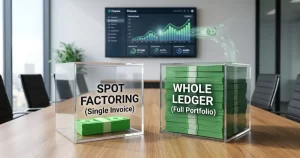
Running a new business is tough, especially when you have to wait 30, 60, or 90 days for your customers to pay their invoices. When bills are piling up and you need immediate cash to cover payroll or buy inventory, traditional bank loans often feel completely out of reach. If your business is new and your personal credit history isn’t perfect, most traditional lenders will simply close their doors on you. This leaves many founders searching for a reliable way to keep their business running without taking on heavy debt.
Fortunately, you do not need a perfect credit history to access the working capital trapped in your unpaid invoices. By choosing the best invoice factoring for startups with bad credit, you can convert your accounts receivable into immediate cash within 24 hours. This financing method shifts the focus away from your personal credit score and places it on the financial stability of your commercial clients. In this comprehensive guide, we will break down how to find the best invoice factoring for startups with bad credit so you can keep your cash flowing smoothly.
Why Traditional Banks Say No to Startups with Poor Credit
Traditional banks look at a very specific formula when they evaluate business loan applications. They want to see multiple years of profitable tax returns, a strong business credit history, and an excellent personal credit score from the owners. For an early-stage company, meeting these rigid standards is almost impossible.
When you add a poor credit score to the mix, traditional lenders instantly label your business as a high-risk gamble. They worry that a past financial setback means you will not be able to repay a standard term loan or monthly line of credit. This creates a frustrating cycle where you need capital to grow, but you cannot get capital because you haven’t grown yet.
Instead of fighting an uphill battle with conventional commercial banks, alternative financing options offer a realistic path forward. Finding the best invoice factoring for startups with bad credit allows you to bypass these strict bank requirements completely.
What is Invoice Factoring and How Does It Work?
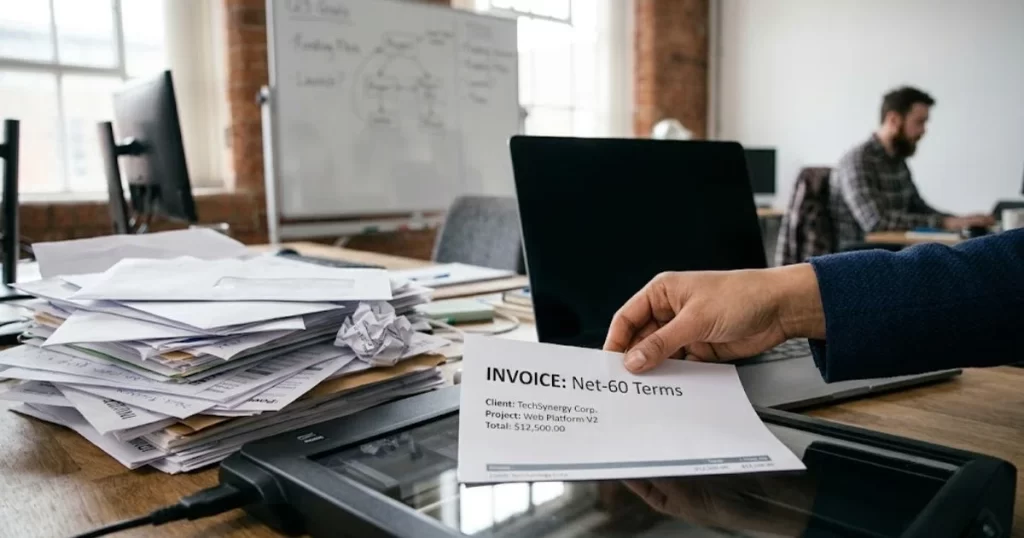
Invoice factoring is not a loan; it is the sale of an asset. You are selling your unpaid business-to-business (B2B) or business-to-government (B2G) invoices to a specialized financial company called a factor.
The factor buys these invoices at a slight discount and advances you most of the cash upfront. Once your customer pays the invoice at the end of the normal payment term, the factor releases the remaining balance to you, minus a small processing fee.
Understanding this process helps you see why the best invoice factoring for startups with bad credit is so accessible for new business owners. The financial partner cares about whether your customers will pay their bills, not whether you had a credit issue a few years ago.
The Standard Step-by-Step Factoring Process
To see how simple this setup can be, let us look at how a typical transaction unfolds from start to finish:
- Deliver the Work: You provide your goods or services to your corporate client and issue a standard invoice with net-30 or net-60 payment terms.
- Submit the Invoice: You send a copy of that outstanding invoice to your chosen provider of the best invoice factoring for startups with bad credit.
- Receive the Cash Advance: The factoring provider verifies the invoice and transfers an upfront advance, usually between 80% and 95% of the total value, directly to your bank account within 24 hours.
- Customer Pays the Factor: Your customer pays the full invoice amount directly to the factoring company when the bill comes due.
- Final Settlement: The factoring company deducts their percentage fee and sends the remaining held reserve back to your business.
The Core Advantage: Your Customer’s Credit Matters Most
The biggest roadblock for a new business owner with a low credit score is the constant fear of rejection during credit checks. The beauty of seeking the best invoice factoring for startups with bad credit is that the credit check looks outward rather than inward.
Factoring providers prioritize the commercial creditworthiness of your debtors. If you are invoicing stable, well-established corporations or government agencies, the factor knows the risk of non-payment is low. They are happy to purchase those invoices because they trust your clients’ ability to pay.
“When we evaluate a young company, we are not looking for a spotless balance sheet from the founder,” says commercial finance expert Marcus Vance. “We look at the payment track record of the companies buying from them. If their clients are reliable, the startup can access the cash they need.”
This unique structure means you can secure funding even if you have an open bankruptcy, tax liens, or a FICO score below 550. It democratizes access to capital for everyday entrepreneurs who just need their hard-earned cash sooner.
Key Features to Compare When Looking for a Factor
Not every financing company offers the same terms, rates, or structures. To find the best invoice factoring for startups with bad credit, you need to understand the small details hidden inside your contract.
Recourse vs. Non-Recourse Factoring
This is the most critical distinction in any factoring agreement. It determines who loses money if your client fails to pay the invoice.
- Recourse Factoring: If your customer defaults on the invoice or refuses to pay, your startup must buy back that invoice from the factor. This is the most common option and comes with lower fees.
- Non-Recourse Factoring: The factoring company assumes the credit risk. If your customer goes bankrupt and cannot pay, you do not have to return the advanced cash. This option is safer but carries higher fees.
When searching for the best invoice factoring for startups with bad credit, you must weigh the cheaper costs of recourse agreements against the peace of mind that non-recourse options provide.
Advance Rates and Discount Fees
The advance rate is the percentage of the invoice value you receive immediately. This usually ranges from 80% to 95%. The discount fee, or factor rate, is what the company charges for the service, typically between 1% and 5% per month that the invoice remains unpaid.
Top Companies Offering the Best Invoice Factoring for Startups with Bad Credit

Let us look at some of the top-rated factoring companies that specialize in working with early-stage businesses and flexible credit profiles.
1. altLINE (The Southern Bank Company)
Because altLINE operates as a direct bank lender, they can often provide highly competitive rates without middleman markups. They are widely regarded as one of the choices for the best invoice factoring for startups with bad credit because they focus heavily on B2B relationship building.
They offer transparent structures and help young companies transition into traditional banking products as their business credit profiles improve over time. Their digital platform makes uploading invoices straightforward for busy founders.
2. Porter Capital
Porter Capital has been a pillar in the alternative finance space for decades. They offer exceptionally high advance rates, sometimes reaching up to 97% of the total invoice value. This makes them a strong contender for the best invoice factoring for startups with bad credit when maximizing initial cash flow is your primary goal.
They do not place strict minimum time-in-business restrictions on applicants, which is a major win for brand-new startups. Their approval process focuses squarely on the health of your accounts receivable aging report.
3. Clarify Capital
Clarify Capital acts as a flexible matching platform and direct funder that excels at rapid turnaround times. If you need approval within 24 to 48 hours, they offer some of the best invoice factoring for startups with bad credit in terms of pure speed.
Their advisory team works closely with founders to look past historical credit blemishes and build a funding structure that matches their specific monthly sales volumes.
4. Factor Finders
Factor Finders operates as a specialized broker network that matches your specific industry needs with the perfect funder. Because different industries have different payment dynamics, using a broker can help you locate the best invoice factoring for startups with bad credit tailored to niches like freight, staffing, or construction.
They have access to over twenty trusted funding sources, giving you a much higher chance of approval even if your corporate background includes significant credit hurdles.
Side-by-Side Comparison of Top Factoring Providers
To help you visualize your options, here is a breakdown of what these top companies look for and provide to small businesses:
| Provider | Best For | Typical Advance Rate | Typical Fee Range |
| altLINE | Direct Bank Stability | 80% – 90% | 0.75% – 3.50% |
| Porter Capital | High Advance Percentages | Up to 97% | 1.00% – 4.50% |
| Clarify Capital | Quick Funding Decisions | 85% – 95% | 1.00% – 5.00% |
| Factor Finders | Niche Industry Matching | 90% – 95% | 1.50% – 4.00% |
Evaluating these details carefully will ensure you lock in the best invoice factoring for startups with bad credit for your current operational scale.
How to Qualify for Factoring with a Low Credit Score

While qualifying for a factoring agreement is substantially easier than getting a bank loan, you still need to provide specific documentation to show your business is legitimate. Gathering these documents ahead of time ensures a smooth application process.
Clean Accounts Receivable (A/R) Aging Reports
The funding specialist will want to see a clear report showing who your clients are and how long their invoices have been outstanding. They prefer invoices that are fresh (under 30 days old) rather than old, dusty debts that look like they might turn into bad collection struggles.
Verifiable Commercial Invoices
Every invoice you submit must be tied to a completed service or fully delivered product. The factor will verify this data directly with your client’s accounts payable department, so accurate contact details and clear purchase orders are essential when applying for the best invoice factoring for startups with bad credit.
Basic Corporate Documentation
You will need to show your company’s Articles of Incorporation or LLC registration papers, along with a dedicated business bank account. Even the best invoice factoring for startups with bad credit providers cannot wire funds into a casual personal checking account.
Hidden Costs and Fees to Watch Out For
While the headline discount rate might look incredibly appealing, alternative financing companies sometimes include secondary fees that can eat into your profit margins if you are not careful. Reading the fine print guarantees you truly get the best invoice factoring for startups with bad credit.
Application and Setup Fees
Some providers charge an upfront administrative fee to cover the cost of running credit checks on your customers and establishing your digital portal. Look for companies that waive these fees to maximize your initial savings.
Monthly Minimum Volume Penalties
Certain factoring agreements require you to process a minimum dollar amount of invoices every month. If your sales dip or a client pauses their contract, the factor might charge you a penalty fee for falling below that line. The best invoice factoring for startups with bad credit should offer flexible terms that do not punish your business during slow seasons.
ACH and Wire Transfer Costs
Every time the factoring provider sends money to your account, they may charge a small processing fee. While a $25 wire fee seems minor, it adds up quickly if you are factoring multiple small invoices every week.
Step-by-Step Guide to Applying for Your First Factoring Line
If you are ready to unlock your accounts receivable, following a systematic preparation plan will speed up your funding timeline significantly.
1.Organize Your Sales Ledger:Day 1.
Pull an updated accounts receivable report from your accounting software. Ensure all customer names, addresses, and invoice amounts are completely accurate.
2.Select Creditworthy Customer Invoices:Day 1.
Identify the specific invoices from your most reliable corporate clients. Choosing customers with strong credit histories gives you the highest chance of approval.
3.Submit Your Digital Application:Day 2.
Fill out the online application with a top provider of the best invoice factoring for startups with bad credit. Upload your business formation documents and bank statements.
4.Verification and Notice of Assignment:Days 3-4.
The factor will contact your clients to verify that the work was completed. They will send a “Notice of Assignment” instructing your clients to send future payments to the factor’s secure address.
5.Receive Capital and Move Forward:Day 5.
Once verified, the initial advance rate percentage is deposited directly into your business bank account. You can instantly use this capital to meet your daily operational demands.
How Factoring Helps Rebuild Your Business Credit Profile
An overlooked benefit of alternative invoice finance is its ability to help restore your company’s long-term financial health. Because factoring does not add a massive liability to your balance sheet like a traditional merchant cash advance or high-interest term loan, it protects your debt-to-equity ratio.
By using your consistent cash injections to pay your suppliers early, settle outstanding vendor balances, and keep up with tax obligations, you naturally establish a positive track record. Over time, this consistent, stable performance builds up your commercial Dun & Bradstreet score, paving the way for standard bank funding down the road.
Alternatives to Invoice Factoring for Bad Credit Startups
If selling your invoices does not feel like the right strategic move for your operational model, there are a few other alternative paths worth exploring.
- Merchant Cash Advances (MCA): This option provides an upfront lump sum in exchange for a percentage of your daily credit card sales. It is fast but carries significantly higher fees than the best invoice factoring for startups with bad credit.
- SBA Microloans: The Small Business Administration offers smaller community-based loans up to $50,000. They have relaxed credit requirements but involve a massive amount of paperwork and long waiting periods.
- Equipment Financing: If you specifically need money to buy machinery or vehicles, the equipment itself serves as collateral, making lenders more willing to overlook a lower credit score.
Conclusion: Take Control of Your Business Cash Flow
A low credit score should never spell the end for a promising new business. When your company’s growth is stalled by slow-paying commercial clients, alternative working capital strategies provide the perfect bridge to long-term stability. By taking the time to research and secure the best invoice factoring for startups with bad credit, you can stop stressing over unpaid invoices and refocus your energy on scaling your operations.
Ready to Streamline Your Cash Flow?
Don’t let rigid bank rules and old credit setbacks keep your startup from reaching its true potential. If you have outstanding commercial invoices and need immediate capital to drive your operations forward, our team is here to guide you through the process.
We can help you evaluate your accounts receivable ledger, structure flexible funding options, and secure the cash flow your business deserves without the stress of conventional debt.
Contact us today through our official website contact page to speak with a dedicated finance specialist and unlock your working capital now.