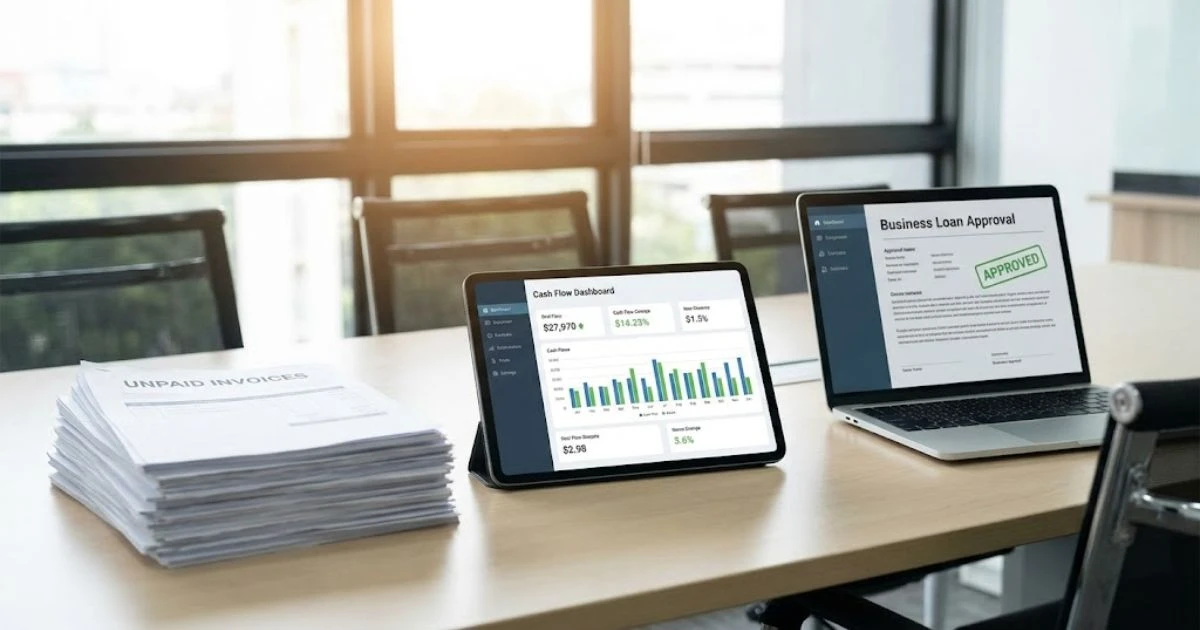
Waiting 30, 60, or even 90 days for clients to pay invoices can suffocate a growing business. You have payroll to meet, suppliers to pay, and new opportunities to chase, but your cash is trapped in accounts receivable. This cash flow gap is one of the most common reasons otherwise healthy companies struggle to survive. Trying to manage operations with uneven revenue creates constant stress and forces you to put growth plans on hold.
Fortunately, you do not have to wait around for your customers to clear their balances. When looking for the right financing solution, the debate usually comes down to choosing a working capital line of credit vs factoring. Both options give your business immediate access to cash, but they function in completely different ways, carry different costs, and suit different business models. This guide will break down the mechanics, pros, cons, and hidden differences of both options so you can make an informed choice for your company’s financial future.
Understanding the Core Basics of Cash Flow Financing
Before diving into a direct matchup, we need to clarify what these financial tools actually are. Many business owners confuse the two because they both solve the same underlying issue: getting cash into your bank account quickly. However, the legal and structural setups are entirely distinct.
What is a Working Capital Line of Credit?
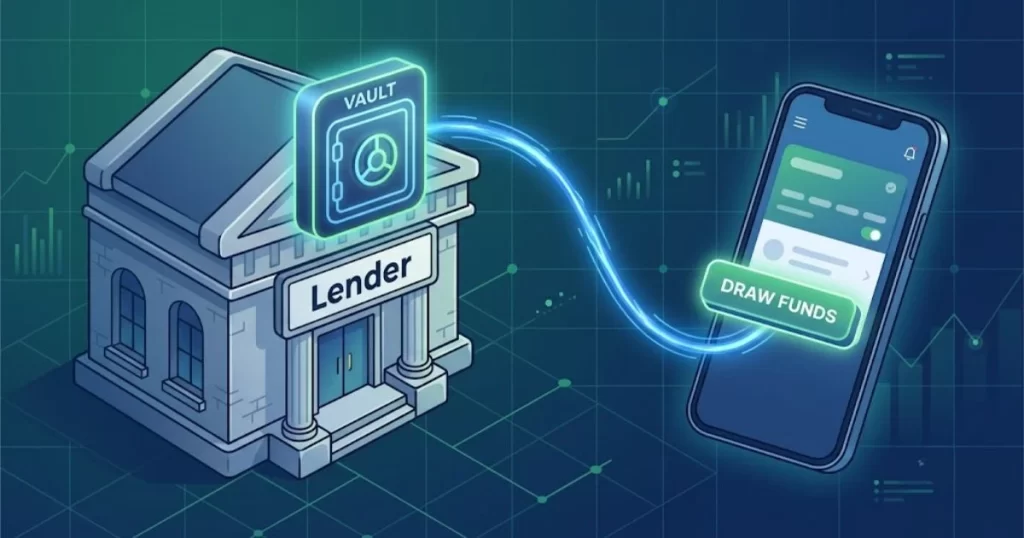
A working capital line of credit is a flexible loan from a bank or an online commercial lender. Think of it like a business credit card with a much higher limit and lower interest rates. The lender approves your business for a maximum borrowing amount, such as $100,000.
You can draw funds from this line whenever you need to cover short-term operational expenses. You only pay interest on the money you actually borrow. As you repay the principal amount plus interest, your available credit goes back up, allowing you to use it again and again.
What is Invoice Factoring?
Invoice factoring is not a loan. Instead, it is the outright sale of your unpaid customer invoices to a specialized financial company called a factor. If you have $50,000 in outstanding invoices from reliable business clients, you can sell those invoices to a factoring company.
The factor will advance you a large portion of the invoice value immediately, usually between 80% and 90%. Once your customer pays the invoice directly to the factoring company, the factor releases the remaining balance to you, minus a small percentage kept as a processing fee.
How a Working Capital Line of Credit Works
A revolving line of credit acts as a financial safety net for your daily operations. It sits in the background until your business encounters an expense it cannot cover with current cash reserves.
The Application and Approval Process
Getting a line of credit from a traditional bank requires a thorough financial evaluation. Banks look closely at your personal and business credit scores, tax returns, profit and loss statements, and overall debt levels. They want to ensure your business has a steady track record of revenue to handle monthly repayments.
Collateral and Personal Guarantees
Secured lines of credit require you to pledge business assets as collateral. This could include real estate, equipment, or inventory. In addition, most lenders ask for a personal guarantee. This means if your business fails to repay the debt, you become personally responsible for the balance. Unsecured lines of credit exist, but they come with much lower borrowing limits and significantly higher interest rates.
Repayment Structures and Interest
When you draw funds from your line of credit, you enter a standard repayment cycle. You will make monthly or weekly payments that cover a portion of the principal plus interest. The interest rate can be fixed or variable, usually tied to the Wall Street Prime Rate. If you do not draw any money from the line, you generally pay nothing, though some banks charge a small annual maintenance fee to keep the account open.
How Invoice Factoring Works
Factoring shifts the focus away from your business financial history and places it on the creditworthiness of your corporate customers.
The Two-Step Advance Process
Invoice factoring operates in two distinct stages:
- The Cash Advance: You submit an unpaid invoice to the factoring company. They verify the invoice and wire an advance (usually 80% to 90%) to your account within 24 to 48 hours.
- The Rebate: Your customer pays the factoring company according to the original invoice terms. The factoring company takes their fee, called the factoring fee or discount rate, and forwards the remaining balance back to you.
Recourse vs. Non-Recourse Factoring
This is a critical distinction that every business owner must understand before signing a contract:
- Recourse Factoring: This is the most common and affordable option. Under a recourse agreement, if your customer fails to pay the invoice after a set period (usually 90 days), your business must buy back the invoice or replace it with a fresh one of equal value.
- Non-Recourse Factoring: The factoring company assumes the credit risk if your customer goes bankrupt or closes down permanently. Because the factor takes on more risk, non-recourse factoring features higher fees and stricter approval processes for your customers.
Detailed Comparison: Working Capital Line of Credit vs Factoring

Choosing between a working capital line of credit vs factoring requires comparing how each option impacts your daily balance sheet, operational control, and customer relationships.
| Feature | Working Capital Line of Credit | Invoice Factoring |
| Financial Structure | Revolving debt / Bank loan | Asset sale (Accounts Receivable) |
| Primary Approval Factor | Your business credit and cash flow | Your customers’ creditworthiness |
| Speed of Funding | 2 to 6 weeks (Traditional banks) | 3 to 5 business days for setup |
| Customer Interaction | Kept strictly private | Factor interacts with customers |
| Maximum Limit | Capped by lender approval | Grows dynamically with your sales |
| Collateral Required | Real estate, inventory, or equipment | The invoices themselves |
1. Speed and Ease of Qualification
If you need cash to cover payroll this Friday, a traditional line of credit is rarely an option. The bank approval process involves extensive paperwork and can take several weeks or months.
Factoring companies can set up a new account in less than a week. Once your account is active, individual invoices are funded within 24 hours of submission. Furthermore, businesses with poor credit or short operating histories can easily qualify for factoring, provided they sell to stable, creditworthy corporate clients.
2. Maximum Funding Flexibility
A line of credit has a fixed ceiling. If your bank approves you for $50,000, you cannot access a single dollar more without reapplying for an extension.
Factoring scales naturally alongside your business growth. If your sales double next month, your available financing doubles because you have more invoices to sell. This makes factoring incredibly popular for rapidly expanding businesses that are outgrowing their local bank limits.
3. Customer Relationship Management
When you use a line of credit, your customers have no idea you are using financing. They send payments directly to your business as usual.
With factoring, the arrangement becomes visible to your clients. The factoring company will send a “Notice of Assignment” to your customers, instructing them to send payments to a new remittance address or lockbox. The factor’s accounts receivable team will also handle collections, contacting your clients if payments run late. While professional factors treat your clients with respect, some business owners prefer to keep their financing choices completely confidential.
Analyzing the Total Costs and Fee Structures
Understanding the true cost of borrowing requires looking past the initial numbers. The fee models for these two options are completely different.
Line of Credit Costs: APR and Interest Rates
Lines of credit are typically priced using an Annual Percentage Rate (APR). Traditional bank lines of credit offer some of the lowest interest rates on the market, frequently ranging from 6% to 12% depending on economic conditions and your credit tier.
Online alternative lenders offer faster approval times but charge higher APRs, sometimes reaching 20% to 35%. You also need to watch out for origination fees, draw fees, and monthly maintenance costs.
Factoring Costs: Discount Rates and Tiered Fees
Factoring companies charge a “discount rate,” which usually ranges from 1% to 4% per month per invoice. While a 2% fee sounds small compared to a 10% bank APR, you must remember that factoring fees are calculated based on time blocks, not a full year.
Cost Calculation Example:
Imagine you factor a $10,000 invoice with a 2% fee for every 30 days it remains unpaid.
- If your customer pays within 30 days, the fee is $200. You receive $9,800.
- If the customer takes 60 days to pay, the fee doubles to 4%, costing you $400.
If you annualized that 2% monthly fee over an entire year, it equates to a 24% annual interest rate. This makes factoring a more expensive option over the long run compared to a traditional bank line of credit.
Real-World Scenarios: Which Option Fits Your Business?
To help visualize how this works in practice, let us look at two simulated business case studies based on standard commercial finance scenarios.
Scenario A: The Seasonal Manufacturer
- The Business: A commercial printing firm that experiences a massive surge in orders every autumn ahead of the holiday shopping season.
- The Dilemma: They need cash upfront in August to buy raw materials and hire temporary labor. Their regular customers pay reliably within 30 days, but the printing firm needs to spend money before production even begins.
- The Best Fit: A working capital line of credit. Since they need to purchase inventory before invoices are even generated, factoring cannot help them. They can draw from their line of credit in August, produce the goods, and pay off the balance by December once holiday revenue pours in.
Scenario B: The Rapidly Growing B2B Logistics Provider
- The Business: A regional freight delivery company that just landed a major corporate contract with a national retail chain.
- The Dilemma: The new retail client demands 60-day payment terms. The logistics provider must pay their truck drivers every single week. Because the business is young, local banks refuse to approve a line of credit large enough to carry two months of fuel and payroll.
- The Best Fit: Invoice factoring. The retail chain has excellent credit, making the invoices highly valuable to a factor. The logistics provider can convert those 60-day invoices into instant cash every week, allowing them to scale their fleet safely without worrying about missing payroll.
Key Advantages and Disadvantages At a Glance
Reviewing the summary of pros and cons can help narrow down your choice between a working capital line of credit vs factoring.
Working Capital Line of Credit Pros and Cons
- Pros: Lowest cost of capital; maintains total privacy with customers; funds can be used for any business expense (including inventory and equipment).
- Cons: Hard to qualify for; requires high credit scores and strong cash flow history; often demands assets as collateral or a personal guarantee.
Invoice Factoring Pros and Cons
- Pros: Fast approval and funding; setup relies on your clients’ credit ratings rather than your own; funding limits grow automatically as your sales volume expands.
- Cons: Higher overall cost than bank financing; involves customer contact; does not provide funds until after you deliver your service or product.

Conclusion:
Managing your company’s cash flow does not follow a one-size-fits-all strategy. When evaluating a working capital line of credit vs factoring, your decision should align with your operating model, your credit score, and how quickly you need capital. If your business has established a strong credit history, possesses tangible collateral, and needs funds to purchase inventory before sales occur, a revolving line of credit is usually the most cost-effective solution. On the other hand, if you are an early-stage company or a fast-growing B2B business facing cash flow constraints due to slow-paying corporate clients, invoice factoring provides the immediate liquidity and scalability you need to thrive. Take time to analyze your current accounts receivable aging report, speak with your accountant, and weigh the true costs of each option before moving forward.
Let Us Help Guide Your Business Growth
Navigating the world of commercial finance can be complicated, but you do not have to do it alone. Whether you want to explore flexible business lines of credit or secure immediate cash through professional invoice factoring, our trade finance experts are ready to build a customized plan for your company. Head over to our website’s [Contact Us Page] to schedule a free, no-obligation cash flow consultation today, and let us help you unlock the capital trapped in your business operations.